
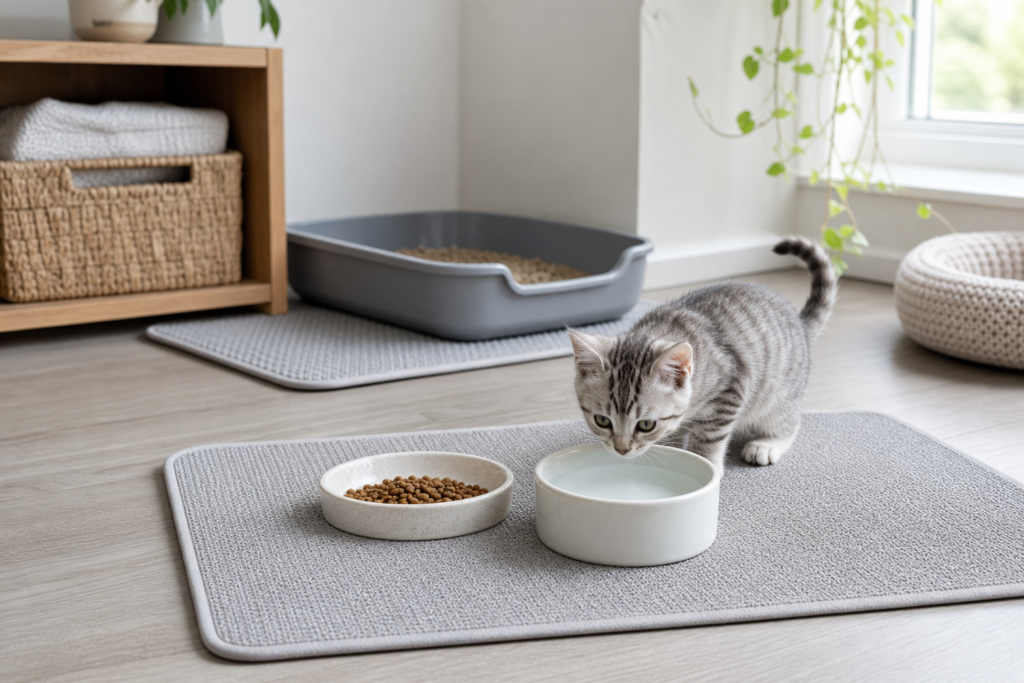
Most kittens want a sensible litter box. Humans often make the box harder to understand than it needs to be.
Use this to set up the first week before accidents become a pattern.
Quick Answer
Use a low-entry box in the safe room, keep it clean, avoid strong scents, place it away from food and quietly reset the kitten after meals, naps and play.
What To Do First
- Choose a box the kitten can enter easily.
- Use familiar litter if you know it.
- Place the box in a quiet reachable spot.
- Scoop often and keep notes on use.
- After an accident, clean with enzyme cleaner and improve access.
Why This Works
Litter success depends on access, comfort, cleanliness and predictability more than punishment.
Common Mistakes
- Do not rub a kitten in accidents.
- Do not hide the only box far from the safe room.
- Do not use heavily scented products.
- Do not change box, litter and room all at once.
When To Slow Down or Call the Vet
Call a veterinarian for straining, crying in the box, blood, frequent unproductive attempts, diarrhea, constipation concern or sudden litter avoidance with other illness signs.
Related Kitten Guides
- Won't use litter box
- Litter setup basics
- Open the full kitten hub
- Use the first-week checklist
- Plan the vet path
Review Note
Source posture: CatWorldly checked Cornell Feline Health Center and Cat Friendly Homes on June 30, 2026 UTC for the general kitten-care boundaries used here. This page is educational; your local veterinarian is the authority for diagnosis, treatment, vaccines, medication and urgent symptoms.