

Behavior hub
Behavior guidance without one-signal guessing.
The Behavior hub helps readers look at the whole cat instead of treating one tail flick, ear angle or meow as a magic translation key. CatWorldly behavior pages connect body language, setting, stress, play, consent, health and routine so readers can respond with less frustration. This hub is useful for biting, hiding, scratching, overexcitement, slow trust-building and the quiet signs that a cat is comfortable. It does not label cats as bad or stubborn. It asks what changed, what the cat can choose, what pressure can be reduced, and when sudden behavior shifts should prompt a health check.
Start with: What Your Cat's Tail, Ears and Whiskers Are SayingStart by reader need
Latest in this hub

Kitten Socialization Without Overwhelm
How to socialize a kitten gently with people, handling, sounds, play and rest without flooding or forced contact.

Kitten Carrier Training Before the Vet Visit
A gentle carrier-training plan for kittens: open carrier, bedding, meals, short sessions and stress-free vet preparation.
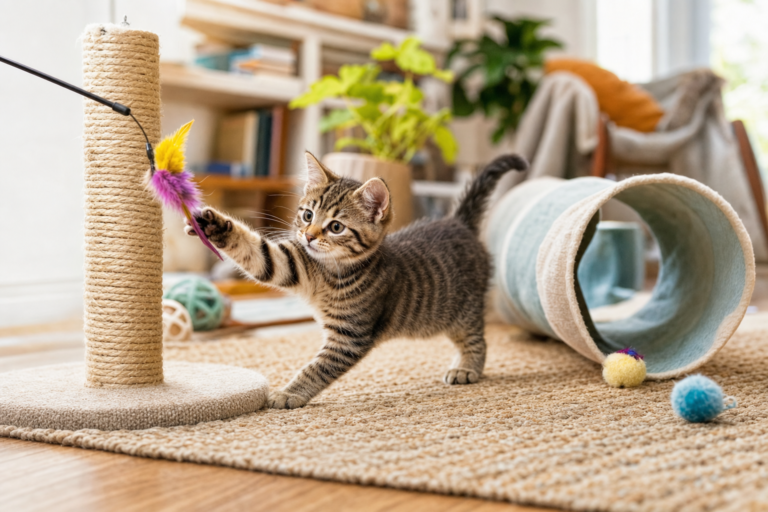
Kitten Biting Hands and Feet: Teach Without Fear
How to redirect kitten biting without punishment: play timing, toys, hands-off rules, naps and when pain may be involved.

Kitten Scratching Furniture: Redirect Early
A humane kitten scratching guide for scratcher placement, texture choices, praise, furniture protection and normal claw behavior.
Kitten Zoomies at Night: Calm the Routine
Why kittens race at night and how to use play, food timing, safe rooms and sleep routines without punishment.
Kitten Hiding Under the Bed: What To Do
How to help a kitten hiding under the bed without chasing, grabbing or turning normal fear into a longer problem.
Tools and checklists
Essential guides
Related CatWorldly paths
FAQ
Why not decode one body part at a time?
A tail or ear position means more when it is read with posture, setting and the cat's choices.
What should readers do with sudden behavior changes?
Treat sudden changes as information and consider health, stress and environment before assuming attitude.