
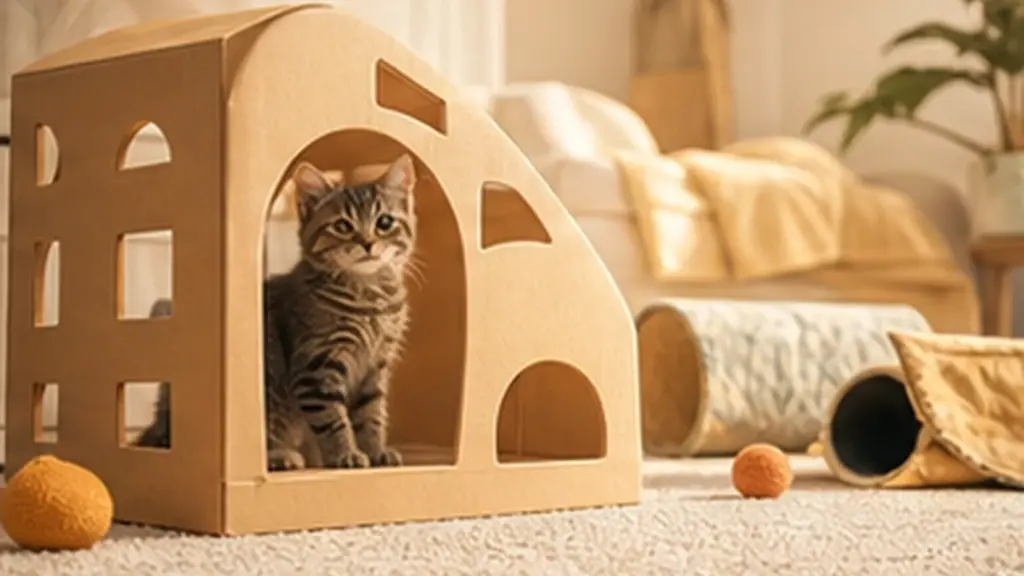
Night zoomies are the sound of unused kitten energy discovering hardwood floors.
Use this when bedtime turns into racing, climbing, ankle ambushes or door drama.
Quick Answer
Add structured evening play, keep the sleep room proofed, avoid rewarding every burst with chaos and use a predictable wind-down routine.
What To Do First
- Run a short wand-toy session before bedtime.
- Offer food on a predictable evening rhythm.
- Remove noisy or unsafe toys overnight.
- Keep the kitten in a proofed sleep area.
- Use morning play to reinforce routine.
Why This Works
Kittens need movement, but the house can decide when movement is safe and where it happens.
Common Mistakes
- Do not chase the kitten as entertainment at bedtime.
- Do not punish racing after under-exercising the kitten.
- Do not leave dangerous toys out overnight.
- Do not turn every night noise into a full event.
When To Slow Down or Call the Vet
Ask a veterinarian if nighttime activity is paired with distress, pain, appetite changes, litter box changes, coughing or sudden behavior shift.
Related Kitten Guides
- Where kittens sleep
- Hands and feet biting
- Open the full kitten hub
- Use the first-week checklist
- Plan the vet path
Review Note
Source posture: CatWorldly checked Cornell Feline Health Center and Cat Friendly Homes on June 30, 2026 UTC for the general kitten-care boundaries used here. This page is educational; your local veterinarian is the authority for diagnosis, treatment, vaccines, medication and urgent symptoms.