
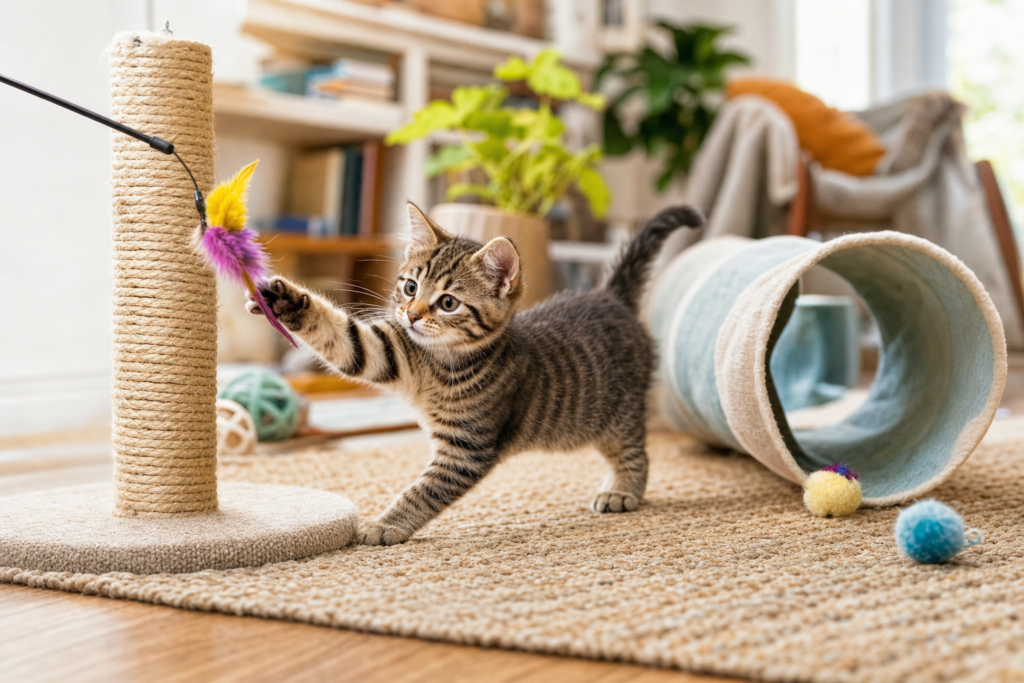
Kitten biting is often play with bad target selection. The goal is not to scare the kitten out of play, but to teach better rules.
Use this when hands, ankles or blanket movement have become the kitten game.
Quick Answer
Stop using hands as toys, redirect to wand or kicker toys, end play briefly when teeth hit skin and build more predictable play-rest routines.
What To Do First
- Use wand toys so teeth chase the toy, not fingers.
- Freeze and calmly pause when biting hits skin.
- Offer a kicker toy for wrestling.
- Schedule short play before high-chaos times.
- Make sure the kitten is getting enough sleep.
Why This Works
Kittens learn what works. If biting always creates exciting movement, biting keeps winning.
Common Mistakes
- Do not slap, yell or scruff.
- Do not wrestle with bare hands.
- Do not tease through blankets.
- Do not keep playing harder after the kitten is overstimulated.
When To Slow Down or Call the Vet
Ask a veterinarian if biting starts suddenly with pain signs, sensitivity, limping, appetite change or unusual aggression.
Related Kitten Guides
- Play and socialization
- Socialization without overwhelm
- Open the full kitten hub
- Use the first-week checklist
- Plan the vet path
Review Note
Source posture: CatWorldly checked Cornell Feline Health Center and Cat Friendly Homes on June 30, 2026 UTC for the general kitten-care boundaries used here. This page is educational; your local veterinarian is the authority for diagnosis, treatment, vaccines, medication and urgent symptoms.