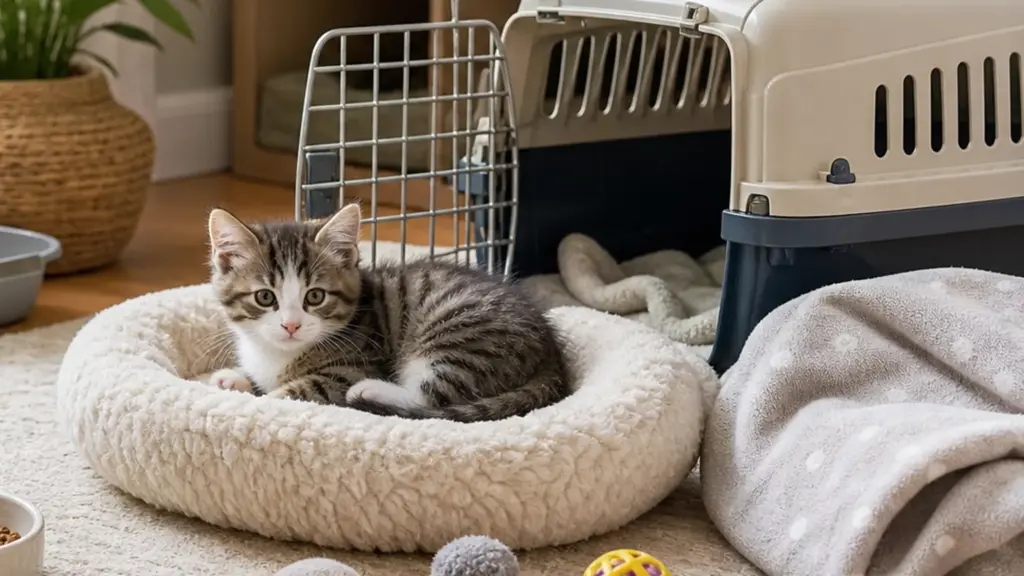
AI-generated illustrative kitten-care image for CatWorldly.
A first-week shopping list should make the kitten safer, not make the house look like a pet-store display.
Use this before adoption day or when you need to separate essentials from cute extras.
Quick Answer
Buy a carrier, kitten food, low-entry litter box, litter, bowls, scratcher, simple bedding, safe toys, cleaning supplies and a vet-note plan before buying luxury furniture.
What To Do First
Start with the same food the kitten already eats if possible.
Choose a low-entry litter box and unscented litter unless instructed otherwise.
Get a stable scratcher and a few supervised toys.
Buy enzyme cleaner before the first accident.
Keep the carrier out as a den, not only as a vet-trip object.
Why This Works
The first week is about routines. Gear earns its space when it helps food, water, litter, rest, safety or transport.
Common Mistakes
Do not buy tiny novelty items that will be outgrown immediately.
Do not choose covered litter boxes only because they look cleaner to humans.
Do not buy string toys that stay out unsupervised.
Do not replace veterinary planning with gadgets.
When To Slow Down or Call the Vet
Ask your veterinarian about food amount, vaccine timing, parasite prevention, microchip timing and any supplies needed for the kitten age and health history.
Source posture: CatWorldly checked Cornell Feline Health Center and Cat Friendly Homes on June 30, 2026 UTC for the general kitten-care boundaries used here. This page is educational; your local veterinarian is the authority for diagnosis, treatment, vaccines, medication and urgent symptoms.