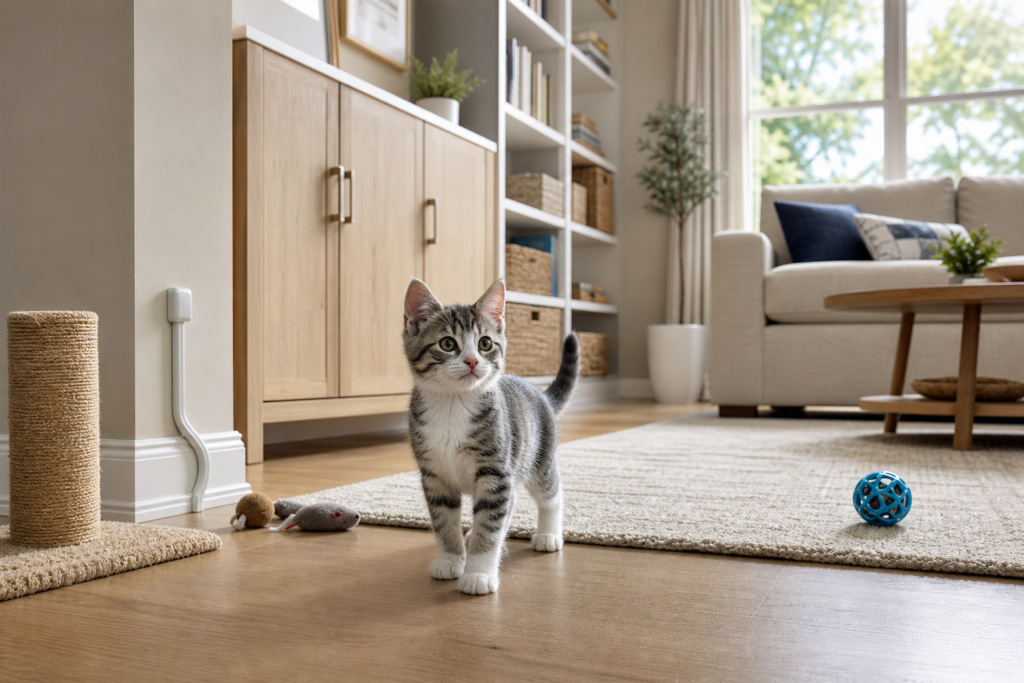
AI-generated illustrative kitten-proofing image for CatWorldly.
Kitten-proofing starts with the assumption that the kitten will find the exact thing you forgot to move. Curiosity is not bad behavior; it is the operating system.
Use this as the broad sweep before a kitten gets access beyond the safe room.
Quick Answer
Walk the home at kitten height and remove swallow risks, toxic plants, cords, unstable furniture, unsafe windows, chemicals, medications and small gaps before free exploration.
What To Do First
Start with the safe room, then expand one room at a time.
Check floors, under furniture and low shelves for tiny objects.
Secure cords, blinds, screens and balconies.
Move medications, cleaners, essential oils and human foods behind closed doors.
Close laundry machines, toilets, recliners and appliance gaps.
Why This Works
A kitten explores with mouth, paws and sudden momentum. Room-level prevention is easier than emergency problem solving.
Common Mistakes
Do not rely on the kitten being too small to jump.
Do not assume a houseplant is safe without checking.
Do not leave wand toys, ribbons or thread out after play.
Do not open the whole home before litter and food routines are stable.
When To Slow Down or Call the Vet
For swallowed string, suspected toxin exposure, falls, burns, electrical chewing, injury or abnormal symptoms, stop home troubleshooting and call a veterinarian or poison-control resource.
Source posture: CatWorldly checked Cornell Feline Health Center, Cat Friendly Homes and ASPCA poison-control guidance on June 30, 2026 UTC for the general safety boundaries used here. This page is educational; your local veterinarian is the authority for diagnosis, treatment, vaccines, medication and urgent symptoms.