
Cats communicate constantly, but they rarely do it in one simple signal. A meow, a tail flick or a flattened ear only makes sense when you read the whole cat and the whole moment.
Meows Are Often For Humans
Adult cats do not rely on meowing with one another the way they often do with people. Many household cats build a personal vocabulary for their humans: short greetings, longer demands, chirps, trills, urgent calls and dramatic complaints at dinner time.
- A short meow can be a greeting or acknowledgment.
- Repeated meows often mean excitement, urgency or expectation.
- Chirps and trills are commonly used in friendly attention-getting.
- Yowling, growling or hissing deserves more caution and space.
The Tail Is A Mood Barometer
A relaxed upright tail can signal friendly confidence. A puffed tail usually means fear or defensive arousal. Fast lashing can mean irritation or overstimulation, even if the cat seemed happy a moment earlier.
The mistake is reading one movement in isolation. A gently moving tail on a loose body is not the same as a whipping tail on a stiff body with hard eyes.
Ears and Whiskers Add Context
Forward ears often show curiosity or attention. Ears pinned back or flattened against the head can show fear, discomfort or defensive tension. Whiskers may sit neutral when relaxed, push forward during investigation, or pull back when a cat wants distance.
The Slow Blink
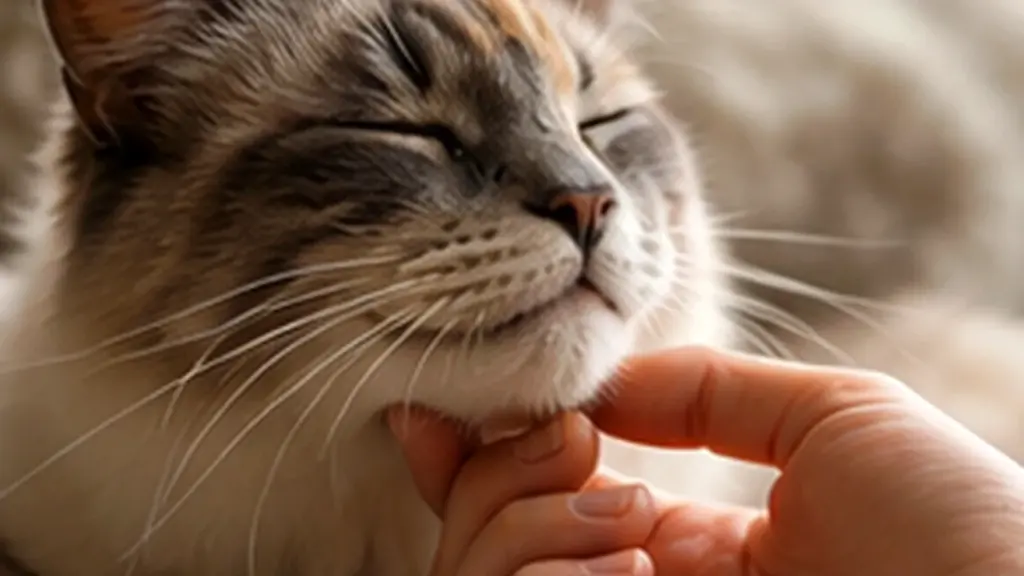
The slow blink is one of the most beloved cat signals because it feels quiet and deliberate. When a cat looks at you and slowly closes and opens the eyes, many cat people read it as trust. Slow-blinking back can be a gentle way to answer without crowding the cat.
The safest rule is simple: let the cat keep choices. If the body softens, the cat leans in and the tail stays relaxed, continue gently. If the cat stiffens, turns away, hides, swats or vocalizes in distress, pause.
Adapted for CatWorldly from Tony Yustein’s The Book of Cats: Love, Life, and the Wisdom of Whiskers.