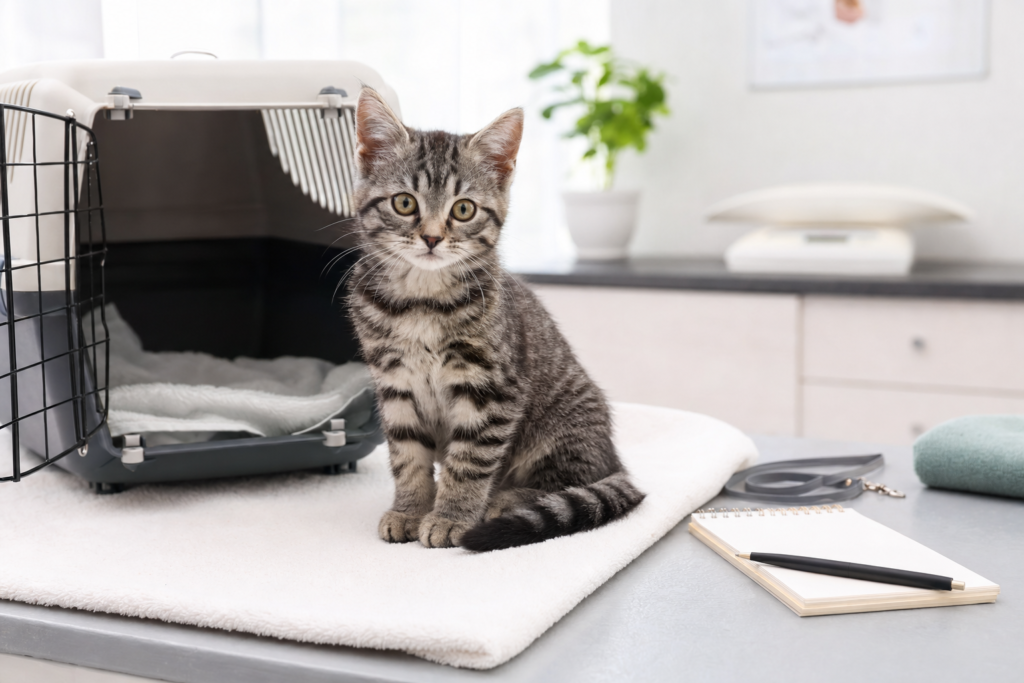
AI-generated illustrative kitten-care image for CatWorldly.
A new kitten may eat less after a move, but not eating is never something to ignore casually.
Use this to organize the first checks before calling the shelter, rescue, breeder or veterinarian.
Quick Answer
Check whether the kitten has the familiar food, a quiet room, clean water, easy bowl access and no obvious illness signs. If a young kitten refuses food or seems unwell, call a veterinarian.
What To Do First
Offer the same food the kitten was eating before if available.
Move food away from litter and loud household traffic.
Refresh water and use shallow bowls.
Record time, amount offered and amount eaten.
Check for vomiting, diarrhea, weakness, nasal discharge or hiding that seems abnormal.
Why This Works
Food intake is one of the clearest first-week signals. Notes help a veterinarian separate stress from illness risk.
Common Mistakes
Do not force-feed without veterinary instruction.
Do not switch several foods repeatedly in one day.
Do not wait days with a very young kitten that is not eating.
Do not use treats as the whole diet.
When To Slow Down or Call the Vet
Call a veterinarian promptly if the kitten is very young, refuses food, seems weak, has vomiting or diarrhea, breathes abnormally, is dehydrated, or has symptoms that worsen.
Source posture: CatWorldly checked Cornell Feline Health Center, Cat Friendly Homes and ASPCA poison-control guidance on June 30, 2026 UTC for the general safety boundaries used here. This page is educational; your local veterinarian is the authority for diagnosis, treatment, vaccines, medication and urgent symptoms.