
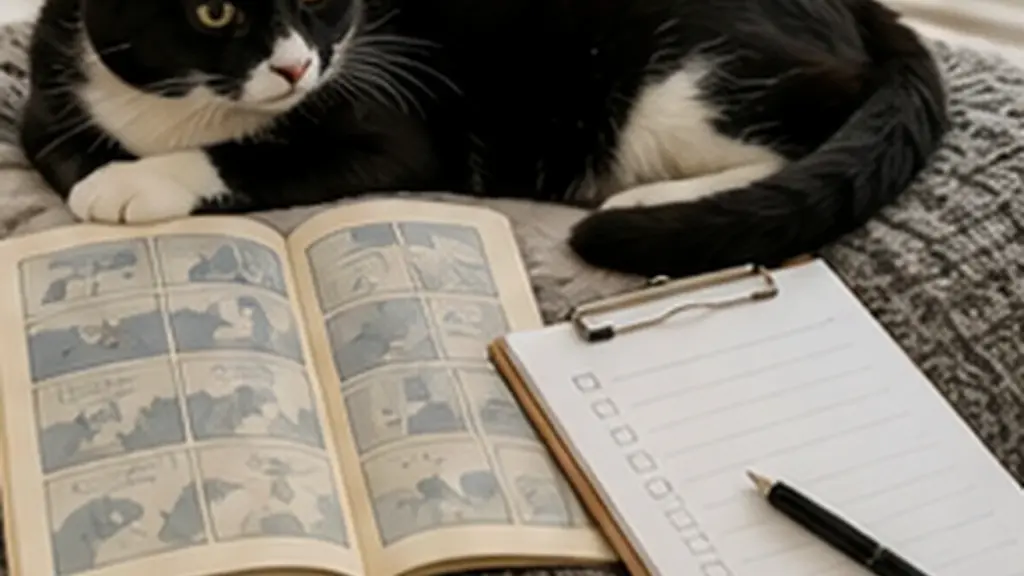
AI media
Readers should not have to guess whether CatWorldly media is real, fictional, illustrative or AI-assisted.
Label Placement
Labels should appear near the media they explain, especially for comics, illustrative article art, videos and any AI-assisted scene that could be mistaken for real-world evidence.
No Fake Proof
Generated media should not be used as fake rescue evidence, fake veterinary examples, fake product tests, fake endorsements or fake before-and-after claims.
Comics and Video
CatWorldly comic worlds are fictional and use AI-generated comic art reviewed by CatWorldly. Comic pages should keep transcript, accessibility text and AI-fiction disclosure data source-side, and render those blocks publicly only when deliberately enabled for that post; video cards should use clear titles, summaries and transcript status.
Article Images
Illustrative article art may support tone, breed examples or visual interest, but it should not be presented as documentary proof of a real animal, a real case, a tested product or a real rescue outcome.
Video Transcript Status
Video cards should say whether an on-site transcript or reviewed visual transcript is available. If not, the card should say the video is in the transcript backlog rather than implying the accessibility work is complete.
Alt Text and Descriptions
Generated images still need reader-useful alt text or descriptions. For comics, the transcript and panel descriptions should explain the joke or scene without depending on the image alone.
Repair or Replace
Media with misleading text artifacts, unsafe implications, identity continuity errors, distorted anatomy, hidden disclosure context or confusing real-world claims should be repaired, replaced or left unpublished.