
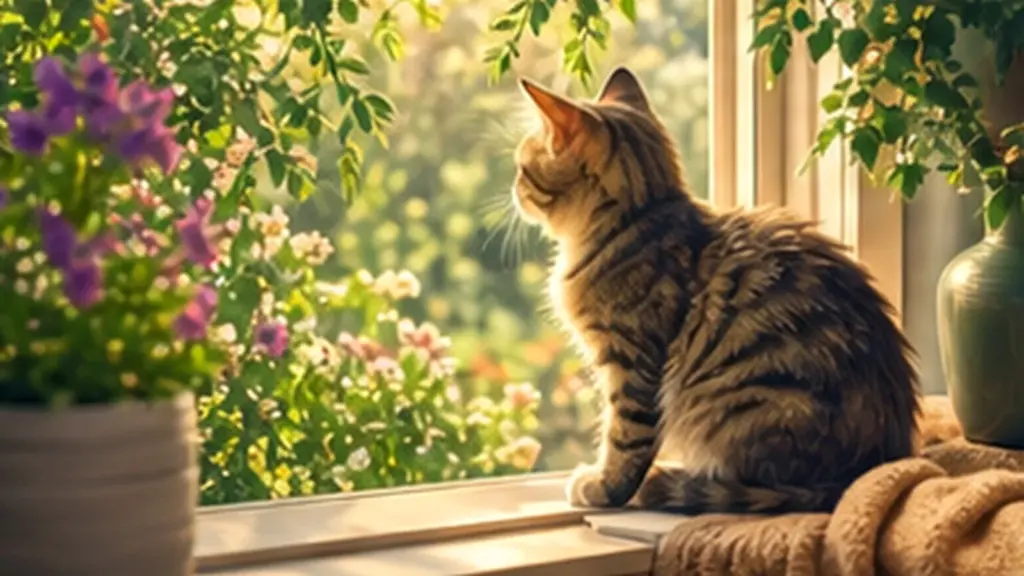
Domestic cats did not enter human life the way many working animals did. The strongest story is not that people invented the cat. It is that cats found an opening beside us and decided it was useful.
The Self-Domestication Story
When early agricultural communities began storing grain, rodents followed. Wildcats followed the rodents. Humans gained quiet pest control, and the least fearful cats gained a reliable hunting ground. Over many generations, that practical truce became a household relationship.
This is why the modern house cat still feels so close to the wild. A cat can sleep on a cushion in the afternoon and stalk a moving shadow with total seriousness five minutes later. The ancient hunter did not disappear. It learned the layout of the living room.
From Wildcats to Household Companions
The domestic cat is commonly traced to the African wildcat, Felis lybica. The link makes sense when you watch everyday cat behavior: territorial patrols, careful scent marking, sudden pounces, high curiosity and the need to control personal space.
Selective breeding has changed coats, body shapes and temperaments, but cats remain closer to their wild ancestors than many people realize. Even a very gentle cat is still an obligate carnivore with a predator’s attention span and a hunter’s body.
How Cats Spread
As people moved through trade routes, farms, ports and cities, cats moved with them. They protected food stores, traveled on ships, appeared in temples and markets, and eventually became companions as much as practical helpers.
- Farm cats helped control rodents around grain and barns.
- Ship cats protected stores at sea and helped carry domestic cats to new ports.
- Urban cats adapted to alleys, homes, shops and crowded human neighborhoods.
- Companion cats became part of household identity, not just household utility.
Why This Origin Still Matters
A cat’s origin story explains a lot of daily behavior. The independence, the hunting games, the need for territory, the sensitivity to sudden change and the odd mix of affection and autonomy all come from a creature that joined us without becoming fully dependent on us.
Good cat care starts with respecting that history. A cat is not a small dog and not a decoration. It is a small predator, a companion and a very opinionated roommate.
Adapted for CatWorldly from Tony Yustein’s The Book of Cats: Love, Life, and the Wisdom of Whiskers.