

Kids and cats
Children can grow gentler around cats when adults make the rules calm.
It is a good idea for children to interact with cats and kittens when the goal is not squeezing, chasing or showing off. The real gift is slower: a child learns to watch, wait, care and respect another living being who has clear preferences.
Cats reward quiet attention. A good cat-child relationship can turn reading time, playtime and simple care routines into daily lessons in empathy, patience, body language and responsibility.
Why it is good
A cat can be a quiet teacher.
The best benefit is not that a child gets constant access to the cat. It is that the child learns a kinder rhythm: observe first, ask with body language, touch gently, and stop when the cat says stop.
A cat teaches children to slow down, wait for consent and notice small signals before touching.
Children learn that another living being can want closeness one moment and space the next.
Simple supervised jobs like fresh water, tidy toys and quiet reading routines make care feel real.
A child who learns safe play and gentle handling can feel proud without needing to control the cat.
Good first interactions
Start with moments the cat can choose.
A safe interaction gives the child something to do and gives the cat a way out. These are better starting points than carrying, hugging or face-to-face contact.
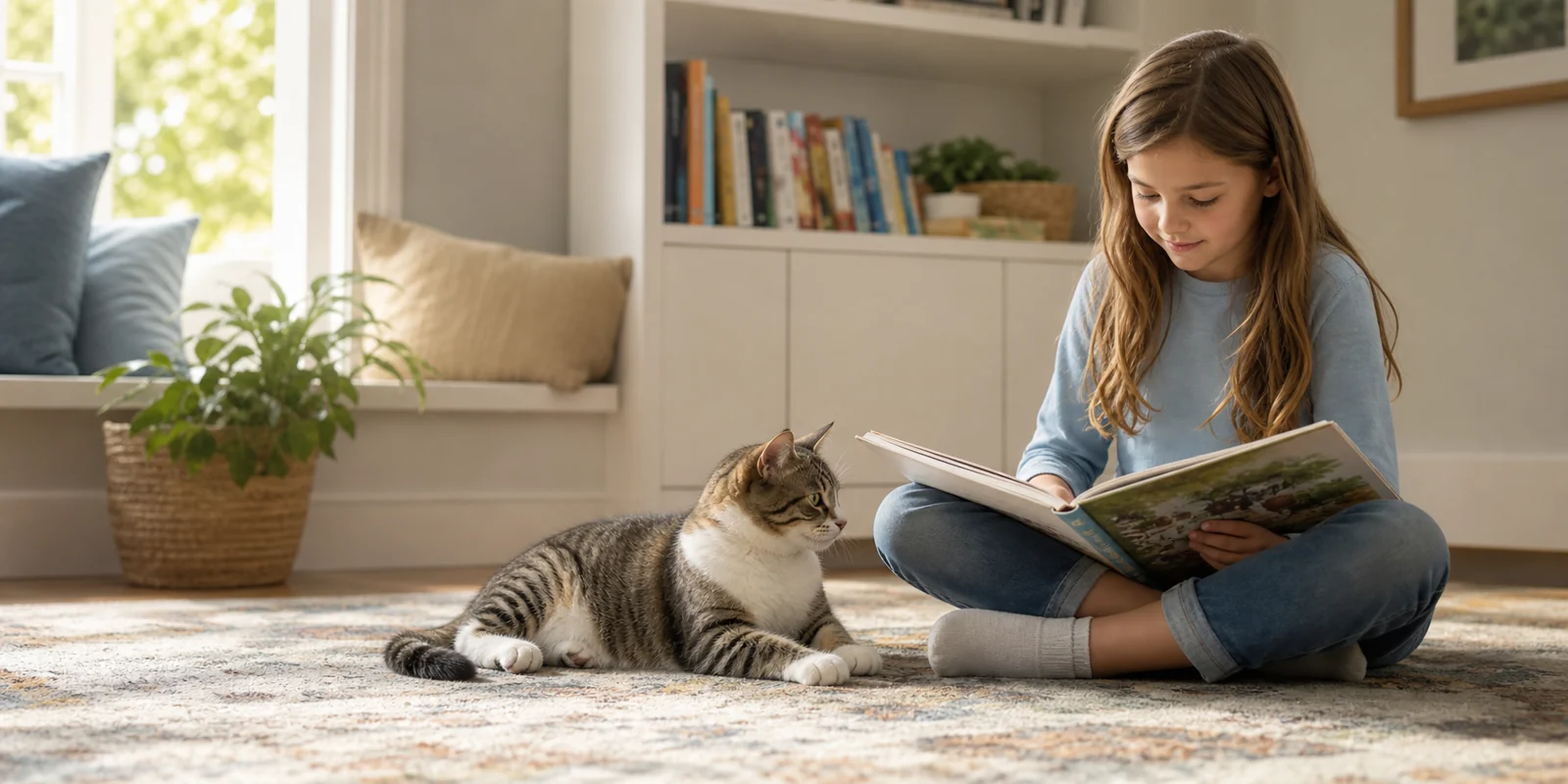
Read near the cat
Quiet reading is a low-pressure way for a child and cat to share space. The cat can approach, stay or leave without being handled.
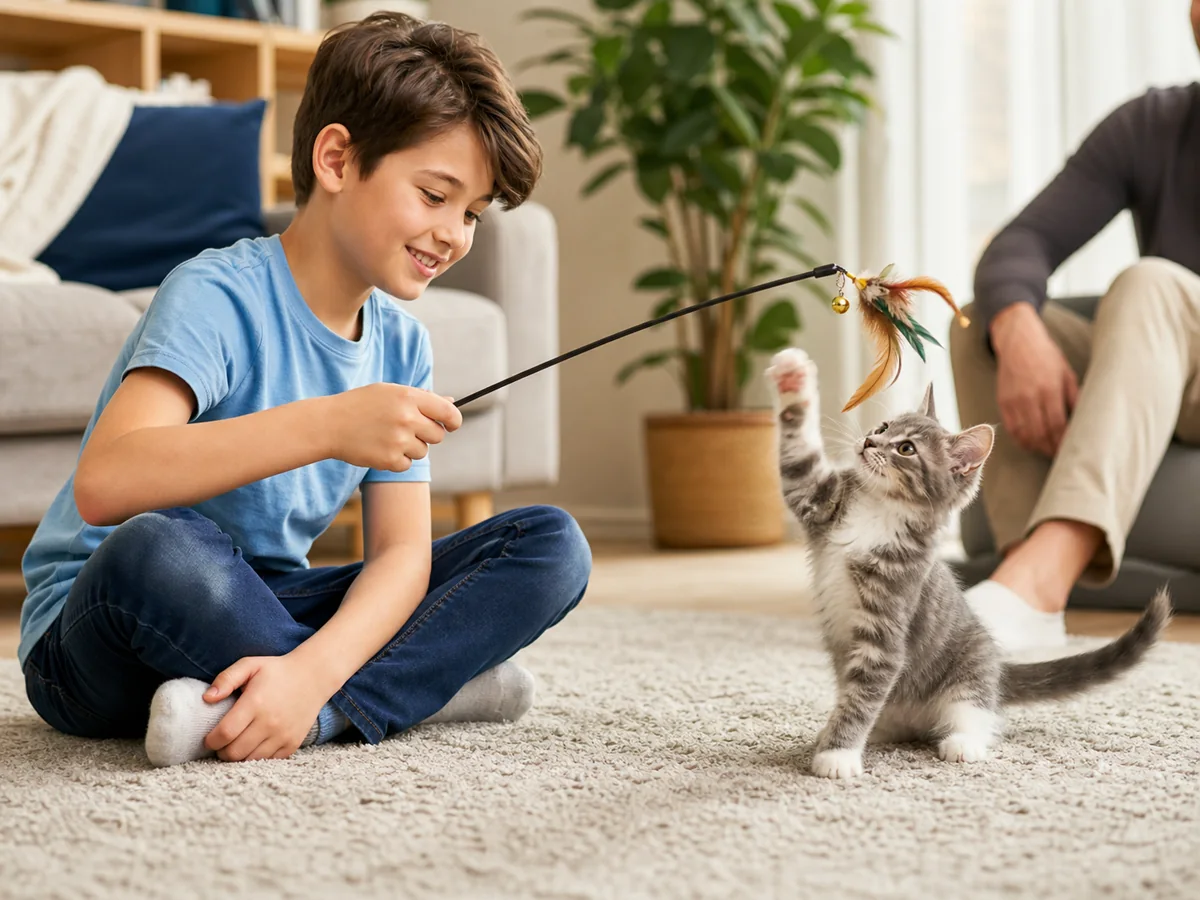
Play with distance
Wand toys let the kitten chase the toy instead of the child. Keep sessions short and stop before the kitten gets overexcited.
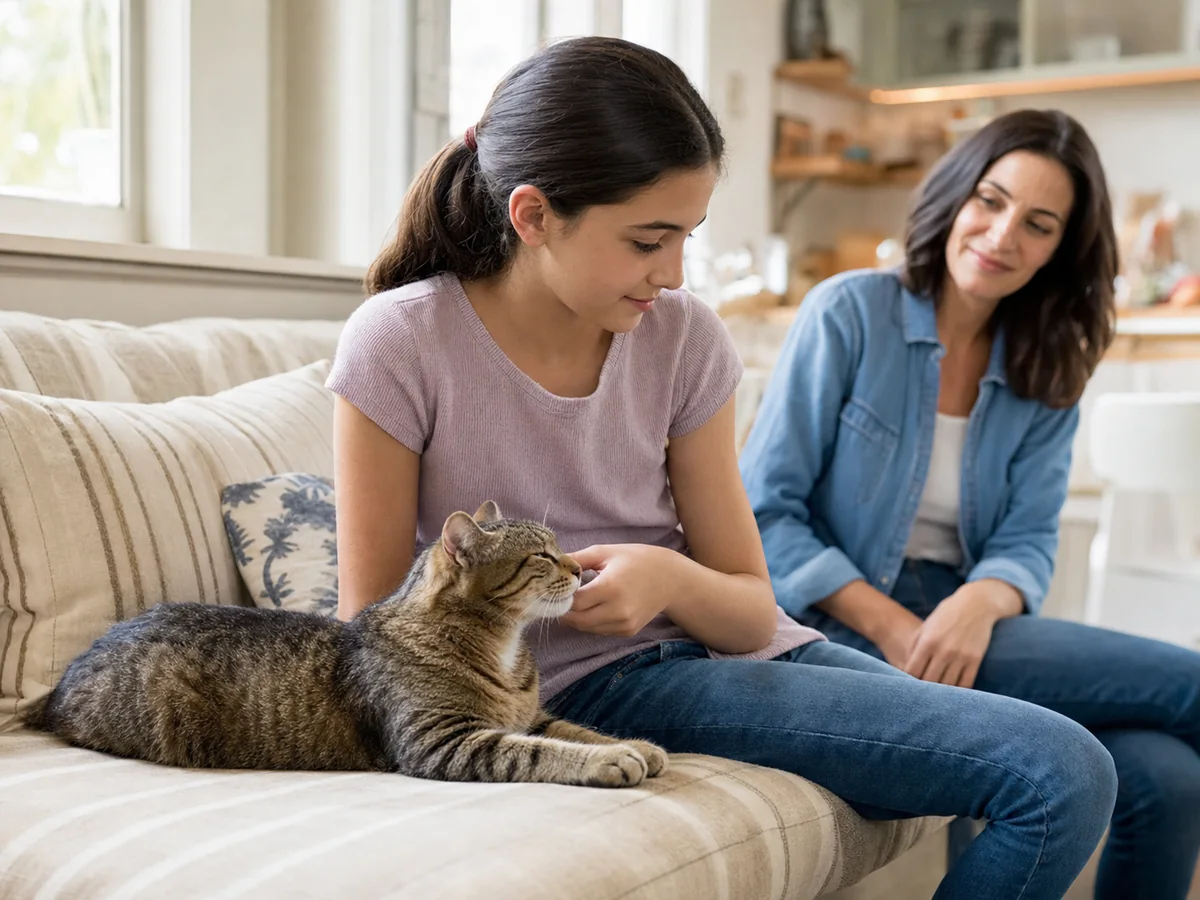
Ask before petting
Teach the child to offer a loose hand, wait, and pet shoulders or cheeks only if the cat chooses to stay relaxed.
Safety rules
Lovely does not mean unsupervised.
These rules protect the child, the cat and the bond. They matter most with kittens, unfamiliar cats, very excited children or any cat showing stress.
Supervision means an adult can step in quickly, especially with younger children or new kittens.
Let the cat walk away. No blocking, chasing, cornering, hugging, carrying or waking a sleeping cat.
Use wand toys and toss toys. Rough hand play teaches kittens to bite and scratch people.
Wash after handling cats, toys, bowls or litter items, and keep litter boxes away from children.
Skip kissing, face nuzzling and leaning over the cat. Gentle side-by-side contact is safer.
Wash bites or scratches right away and seek medical help for serious wounds, infection signs, sick or unknown cats, or uncertain vaccination status.
Age-aware roles
Give the child a job that fits their age.
Point out tail, ears and quiet feet. Adults handle food, litter and lifting.
Help refill water, read near the cat, toss toys and use a wand toy with an adult nearby.
Track routines, refresh puzzle toys, help prepare vet notes and learn when the cat wants space.
Next CatWorldly paths